
Inauguration of the Celebration
The celebration was inaugurated on 3rd August with the unveiling of the theme, a theme talk, the breastfeeding pledge, and the Commitment Tree Activity, setting the tone for the week-long celebration.
Continue readingInauguration of the Celebration
The celebration was inaugurated on 3rd August with the unveiling of the theme, a theme talk, the breastfeeding pledge, and the Commitment Tree Activity, setting the tone for the week-long celebration.
Continue readingB.Sc. Nursing is the short form of Bachelor of Science in Nursing — a four-year undergraduate professional degree regulated by the Indian Nursing Council (INC) and awarded in Maharashtra by the Maharashtra University of Health Sciences (MUHS), Nashik. The programme combines classroom teaching, laboratory-based skill training and supervised clinical practice in hospitals to produce graduates who can register as a Registered Nurse and Registered Midwife (RNRM).
Unlike a diploma in nursing, a B.Sc. degree opens up post-graduate study, teaching positions and international licensure pathways, making it the long-term smart choice for anyone serious about a nursing career.
| Particular | Detail |
|---|---|
| Course Full Form | Bachelor of Science in Nursing |
| Course Level | Undergraduate degree |
| Duration | 4 years (8 semesters), includes 6-month internship |
| Eligibility | 10+2 with Physics, Chemistry, Biology + English; min. 45% (40% for reserved categories) |
| Minimum Age | 17 years on or before 31 December of the admission year |
| Regulator | Indian Nursing Council (INC), New Delhi |
| Affiliating Body (Maharashtra) | Maharashtra University of Health Sciences (MUHS), Nashik |
| State Entrance Exam | MH B.Sc. Nursing CET (conducted by State CET Cell) |
| Average Annual Fee (Private) | ₹80,000 – ₹3,00,000 |
| Average Starting Salary | ₹2.5 – ₹4.5 LPA |
Unlike a diploma in nursing, a B.Sc. degree opens up post-graduate study, teaching positions and international licensure pathways, making it the long-term smart choice for anyone serious about a nursing career.
The eligibility rules for B.Sc. Nursing are standardised across India by the Indian Nursing Council, with small additions by each state and university. Here is what you need:
For complete category-wise eligibility and seat reservation details that apply at our campus, see the Vagarecha Nursing College admission eligibility page.
B.Sc. Nursing admission in India is almost always entrance-test based. The exam you need depends on the state and the type of college (government, private aided, deemed-to-be university, or autonomous institute).
The MH B.Sc. Nursing Common Entrance Test (MH-CET Nursing) is the single most important exam for nursing aspirants. It is conducted by the State Common Entrance Test Cell, Government of Maharashtra, and is the gateway to nursing admissions in all government and 85% of seats in private aided nursing colleges in the state (cetcell.mahacet.org).
Key features of the MH B.Sc. Nursing CET:
Outside Maharashtra, candidates appear for one or more of the following:
For Maharashtra-domicile students, the journey from your 12th result to a B.Sc. Nursing seat is fairly structured. Here is the sequence:
You’ll find the documents checklist and the full step-by-step admission flow used at our campus on the Vagarecha Nursing College admission process page.
The B.Sc. Nursing syllabus in India follows the revised INC curriculum framework, adopted by MUHS and most state universities. The course blends biomedical sciences, professional nursing subjects, behavioural sciences and clinical practice. Here is a year-wise overview:
Fees for B.Sc. Nursing vary widely depending on whether the college is government, government-aided, private unaided, or a deemed-to-be university institute. Here is a realistic snapshot for 2025-26:
| Type of College | Indicative Annual Fee | Total 4-Year Fee |
|---|---|---|
| Government Nursing College (Maharashtra) | ₹15,000 – ₹50,000 | ₹0.6 – ₹2.0 lakh |
| Government-Aided / Municipal Nursing College | ₹80,000 – ₹1,00,000 | ₹3.2 – ₹4.0 lakh |
| Private Unaided (Maharashtra) | ₹1.0 – ₹1.5 lakh | ₹4.0 – ₹6.0 lakh |
| Deemed-to-Be Universities | ₹2.5 – ₹3.5 lakh | ₹10 – ₹14 lakh |
The Fees Regulating Authority (FRA), Government of Maharashtra, reviews and notifies the approved fee for each private nursing college annually, which protects students from arbitrary fee hikes. Our own approved fee structure is published on the Vagarecha B.Sc. Nursing programme page.
This is the single most common question Class 12 students ask. Both qualify you to work as a nurse, but they differ significantly in level, scope and long-term career ceiling.
| Feature | B.Sc. Nursing | GNM (General Nursing & Midwifery) |
|---|---|---|
| Level | Undergraduate degree | Diploma |
| Duration | 4 years (incl. internship) | 3 years + 6-month internship |
| Eligibility | 10+2 with PCB + English, 45% | 10+2 any stream, 40% (incl. English) |
| Regulator | Indian Nursing Council | INC + State Nursing Councils |
| Awarding Body (Maharashtra) | MUHS, Nashik (degree) | MSBNPE, Mumbai (diploma) |
| Higher Studies | Direct entry to M.Sc. Nursing, PhD | Requires Post-Basic B.Sc. first |
| Career Ceiling | Nurse Manager, Educator, NP, Researcher | Mostly bedside / staff nurse roles |
| Work Abroad | Yes (with licensure) | Limited; conversion course usually needed |
| Indicative Starting Salary | ₹25,000 – ₹40,000/month | ₹15,000 – ₹25,000/month |
A B.Sc. Nursing degree is one of the most employable healthcare qualifications in India today. According to Indian Nursing Council projections, India needs roughly 2.4 million additional nurses to reach the WHO-recommended nurse-population ratio of 3:1,000 — meaning B.Sc. Nursing graduates rarely struggle to find their first job.
After graduation and registration, B.Sc. Nursing graduates typically take up roles such as:
| Experience Level | Indicative Monthly Salary |
|---|---|
| Entry-level Staff Nurse (private hospital) | ₹22,000 – ₹40,000 |
| Government Staff Nurse (Maharashtra) | ₹38,000 – ₹55,000 |
| Mid-career (5–8 years) | ₹50,000 – ₹85,000 |
| Senior Nurse / Nurse Manager / ICU Specialist | ₹80,000 – ₹1,50,000 |
| International (Gulf, UK, Canada) | ₹2,00,000 – ₹4,50,000 equivalent |
These ranges are indicative and depend heavily on the city, specialisation and the type of hospital. Government hospital nurses also enjoy structured pay scales as per the 7th Central Pay Commission, plus allowances, pension benefits, and job security.
A B.Sc. Nursing degree is the launchpad for several attractive options:
The cost of nursing education is manageable thanks to a strong scholarship ecosystem. Some of the major options available to B.Sc. Nursing students in Maharashtra are:
A summary of scholarships our students typically apply for is available on the Vagarecha students corner page.
For students in the Mumbai Metropolitan Region — particularly in Thane, Mulund, Kalyan, Dombivli, Bhiwandi and Navi Mumbai — Smt. Vimladevi Khyalilalji Vagarecha (SVKV) College of Nursing Education offers a focused B.Sc. Nursing programme combined with strong clinical exposure and a low student-faculty ratio.
Explore our complete B.Sc. Nursing programme page or book a campus visit to learn more before admissions close for 2026–27.
B.Sc. Nursing in 2026 is no longer just a “safe” career — it is a future-proof profession built around skills the world genuinely needs. The job demand is real, the salaries are catching up, the global mobility is rising, and the higher-study pathways are wider than ever.
If you have PCB in your 12th, a genuine interest in patient care, and the willingness to commit four serious years, a B.Sc. Nursing degree from a reputable MUHS-affiliated college is one of the strongest healthcare decisions you can make.
Apply for the B.Sc. Nursing 2026–27 batch at Vagarecha College of Nursing, Thane — or reach our admissions team for a personalised counselling session.
GNM — short for General Nursing and Midwifery — is a three-year diploma programme (with a mandatory internship in the final year) that trains students to provide comprehensive nursing care across hospitals, community health centres, maternity services, and specialised clinical settings. The curriculum is built around five competency areas defined by the Indian Nursing Council: clinical nursing skills, community health, midwifery and obstetric care, professional ethics, and leadership in patient care teams.
When you complete a GNM, you graduate as a Registered Nurse and Registered Midwife (RN-RM) — a recognised healthcare professional eligible to practise across India and, with the right additional certifications, in several countries abroad.
The course suits students who want to:
| Particulars | Details |
|---|---|
| Full Form | General Nursing and Midwifery |
| Course Level | Diploma |
| Duration | 3 Years (including 6-month internship) |
| Eligibility | 10+2 with English, minimum 40% aggregate (any stream; Science preferred) |
| Minimum Age | 17 years (as on 31st December of admission year) |
| Regulatory Body | Indian Nursing Council (INC), New Delhi |
| Maharashtra Exam Body | MSBNPE, Mumbai |
| Admission Mode | Merit-based / State entrance test (MH-CET Nursing applicable in Maharashtra) |
| Average Course Fee | ₹20,000 – ₹1,50,000 per year (varies by institute) |
| Average Starting Salary | ₹2.4 – ₹4.5 LPA (freshers); ₹6 – ₹9 LPA with experience |
| Top Recruiters | Apollo, Fortis, Manipal, Wockhardt, Jupiter, Kokilaben, government hospitals |
The eligibility framework for GNM is set by the Indian Nursing Council and applied with state-level additions. Here is the consolidated list of requirements applicable for admission in 2026:
In Maharashtra, GNM admissions follow a structured, state-regulated process. Here’s how the typical admission cycle works at colleges affiliated with MSBNPE:
At Vagarecha College, the admission team supports applicants through every step — from document checklists to merit list confirmation.
The GNM curriculum follows the Indian Nursing Council’s Revised GNM Syllabus and balances theory, practical labs, clinical postings, and a final internship. Below is a year-wise breakdown of the core subjects:
By the end of the programme, students sit for the MSBNPE final examinations and, upon passing, can register with the Maharashtra Nursing Council as a Registered Nurse and Midwife.
GNM fees vary widely based on whether the college is government-run, government-aided, or private. As a general benchmark for 2026:
Many state-supported students also qualify for scholarships under schemes administered by the Government of Maharashtra DBT portal — including post-matric scholarships for SC, ST, OBC, EBC, and economically weaker sections. Ask the admissions office for the latest fee structure approved by the state’s Fee Regulatory Authority (FRA).
A GNM is only as strong as the clinical experience behind it. The Indian Nursing Council mandates structured clinical postings throughout the three years, covering general medicine, surgery, paediatrics, mental health, midwifery, community health, and critical care.
At Vagarecha College, students rotate through eight affiliated hospitals across Thane and the Mumbai Metropolitan Region:
This blend of tertiary-care, specialty, and community placements gives students hands-on confidence across patient demographics — exactly what employers look for in a newly qualified RN-RM.
A GNM diploma unlocks one of the most resilient and globally portable career paths in healthcare. Nurses make up the largest occupational group in the global health workforce, and India remains a major training base and exporter of skilled nurses.
Top recruiters consistently include:
Salary outcomes after GNM depend on type of employer (government vs. private), the city, and additional certifications. Here’s a realistic 2026 picture for Indian GNM graduates:
| Experience Level | Annual Salary Range (INR) |
|---|---|
| Fresher / 0–1 year | ₹2,40,000 – ₹4,50,000 |
| 2–5 years | ₹4,00,000 – ₹6,50,000 |
| 5–10 years | ₹6,00,000 – ₹9,00,000 |
| Senior Nurse / Ward In-charge | ₹8,00,000 – ₹12,00,000+ |
| Overseas (UK / Gulf, post-licensure) | ₹15,00,000 – ₹35,00,000+ |
Government hospital nurses also enjoy structured pay scales as per the 7th Central Pay Commission, plus allowances, pension benefits, and job security. Private corporate hospitals typically offer faster initial growth and shift differentials.
A GNM is a strong stand-alone qualification, but it also opens clean pathways to higher academic degrees. The most common routes are:
Many Vagarecha GNM graduates choose to continue their journey with a B.Sc. Nursing degree right here — building on the clinical foundation they already have.
If you’re searching for a GNM college in Thane or the Mumbai region, here’s why students and parents shortlist Smt. Vimladevi Khyalilalji Vagarecha College of Nursing Education:
Detailed admission criteria, document checklists, and merit-list updates are available on the GNM Admission Page and the Facilities Page.
The GNM nursing course is more than a qualification — it’s an entry into a profession that’s needed everywhere, every day. Admissions for the 2026-27 academic year are now open at Smt. Vimladevi Khyalilalji Vagarecha College of Nursing Education, Thane.


Excepteur sint occaecat cupidatat non proident, sunt in culpa qui officia deserunt mollit anim id est laborum. Sedutrems ipsum dolor sit amet, consectetur adipisicing elit, sed do eiusmod tempor incididunt ut labore et dolore magna aliquaut enim ad minim veniam, quis nostrud exercitation ullamco laboris nisi ut aliquip ex ea commodo consequat. Duis auteure dolor in reprehenderit in voluptate velit esse.
Cillum dolore eu fugiat nulla pariatur perspiciatis unde omnis iste natus error sit voluptatem accusantium doloremque laudantium totam rem aperiam eaque ipsa quae ab illo inventore veritatis.
Excepteur sint occaecat cupidatat non proident, sunt in culpa qui officia deserunt mollit anim id est laborum. Sedutrems ipsum dolor sit amet, consectetur adipisicing elit, sed do eiusmod tempor.

Excepteur sint occaecat cupidatat non proident, sunt in culpa qui officia deserunt mollit anim id est laborum. Sedutrems ipsum dolor sit amet, consectetur adipisicing elit, sed do eiusmod tempor incididunt ut labore et dolore magna aliquaut enim ad minim veniam, quis nostrud exercitation ullamco laboris nisi ut aliquip ex ea commodo consequat. Duis auteure dolor in reprehenderit in voluptate velit esse.
Cillum dolore eu fugiat nulla pariatur perspiciatis unde omnis iste natus error sit voluptatem accusantium doloremque laudantium totam rem aperiam eaque ipsa quae ab illo inventore veritatis.
Excepteur sint occaecat cupidatat non proident, sunt in culpa qui officia deserunt mollit anim id est laborum. Sedutrems ipsum dolor sit amet, consectetur adipisicing elit, sed do eiusmod tempor.

Quis ipsum suspendisse ultrices gravidasi commodo viverra maece.
Continue reading
Quis ipsum suspendisse ultrices gravidasi commodo viverra maece.
Continue reading
Quis ipsum suspendisse ultrices gravidasi commodo viverra maece.
Continue reading
Quis ipsum suspendisse ultrices gravidasi commodo viverra maece.
Continue reading
Quis ipsum suspendisse ultrices gravidasi commodo viverra maece.
Continue reading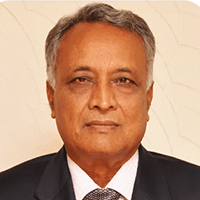
Mr. Chandrakant Gogri is a renowned name in the pharmaceutical industry and is the Founder and Chairman of Aarti Group of Industries. With his extensive experience in business and entrepreneurship, he brings valuable industry perspective to the Trust’s initiatives.
As a Trustee of Mahavir Jain Trust, Mr. Gogri supports the organization’s mission in education, healthcare, and social welfare. He is connected with Smt. Vimladevi Khyalilalji Vagarecha College of Nursing Education, an institution under the Trust. Through his association, he contributes to strengthening the college’s objective of building nursing professionals who uphold excellence, ethics, and compassionate service.

Mr. Ajay Ashar is a veteran real estate leader and the Founder and Chairman and Managing Director of Ashar Group. Since 2001, he has led the development of over 30 million sq ft across the Mumbai Metropolitan Region, spanning residential, commercial, retail, and infrastructure, with a strong focus on building integrated communities and growth ecosystems.
Beyond business, he is a respected industry voice and policy contributor, having held key roles at MITRA and CREDAI MCHI. He has played a major role in transforming Thane through initiatives like Ashar IT Park and continues to drive social impact through healthcare, education, and spiritual infrastructure, including Mahavir Jain Hospital, Trimandir Thane, and the upcoming Dharmaveer Anand Dighe Cancer Hospital.
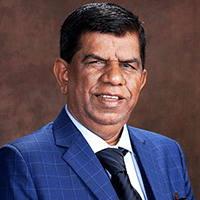
Mr. Deepak Bheda serves as the Principal Trustee of Mahavir Jain Trust, an organization devoted to education, healthcare, and social welfare. A prominent businessman in the construction industry, he also actively contributes to various social and educational organisations. As Principal Trustee, Mr. Bheda provides leadership and guidance to the Trust’s institutional endeavours. He is associated with Smt. Vimladevi Khyalilalji Vagarecha College of Nursing Education, established under the Trust to cultivate nursing professionals who exemplify clinical excellence, ethical practice, and compassionate care.

Mr. Mahendra Jain is an industrialist with multiple ventures and is associated with several social and educational organisations. As a Trustee of Mahavir Jain Trust, Mr. Jain supports the organization’s efforts to build strong educational and healthcare institutions. He had a vision of establishing Smt. Vimladevi Khyalilalji Vagarecha College of Nursing Education, an institution under the Trust named in honour of his late mother, so having a special bond with the college. Through his involvement, he strives to strengthen its goal of developing nursing professionals known for competence, moral values, and kindness in care.

Mr. Bharat Mehta is a businessman and serves as a Trustee of Mahavir Jain Trust. He brings his entrepreneurial experience to further the Trust’s commitment to education, healthcare, and community service. He works towards enabling the college to nurture nursing professionals who combine professional skill with empathy and strong values.
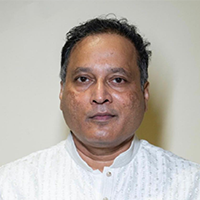
Mr. Vijay Shetty is a Chartered Accountant by profession and serves as a Trustee of Mahavir Jain Trust. He is associated with the Trust to contribute to its mission of advancing education, healthcare, and social welfare. As a Trustee, Mr. Shetty supports the growth of institutions under the Trust, including Smt. Vimladevi Khyalilalji Vagarecha College of Nursing Education. He is committed to strengthening the college’s vision of developing skilled, ethical, and compassionate nursing professionals.

The proposed Shri Dharmaveer Anand Dighe Cancer Hospital aims to provide comprehensive oncology services, including early cancer screening, diagnosis, chemotherapy, and supportive care. Once operational, the facility will enhance access to affordable and specialized cancer treatment for patients in Thane and nearby areas, reflecting the Trust’s commitment to expanding advanced healthcare services.
Through these initiatives, Mahavir Jain Trust continues to contribute significantly to the healthcare infrastructure of Thane, promoting accessible, affordable, and quality medical services for the community.


